

Business Compliance

Business Compliance Issues in India: Why Small Businesses Struggle in the First 3 Years
Starting a small business in India feels exciting. You have a fresh idea, a unique name, and big dreams for the future. Many people believe that once the business is registered, the hardest part is done. But in reality, the real journey begins after registration—and this is where Business Compliance Issues in India start becoming a major challenge.In the initial years, especially the first three, most small businesses face serious difficulties. This is not because they lack skills or passion, but because they are not fully aware of the rules, regulations, and ongoing compliance requirements. Business Compliance Issues in India often include filing returns on time, maintaining proper records, following tax laws, and meeting legal obligations.Understanding and managing Business Compliance Issues in India during these early years is crucial. These first three years can decide whether a business grows successfully or struggles to survive.
What Business Compliance Really Means
Business compliance means following government rules. These rules are related to company law, tax law, labor law, and financial reporting. Every registered business in India must follow these rules on time. Many small business owners think compliance is only about paying tax. But compliance is much more than that. It includes ROC filings, GST returns, income tax returns, payroll rules, licenses, and record keeping. When these things are ignored or delayed, business compliance issues in India start to grow.
Why the First Three Years Are the Hardest
The first three years are the most sensitive time for any business. During this period, owners are busy finding customers, managing money, and growing sales. Compliance work often feels boring or confusing. Because of this, it gets delayed.
In the early stage, businesses also have less money. Hiring experts feels expensive. So owners try to manage compliance on their own. This is where mistakes happen. These mistakes slowly turn into serious business compliance issues in India.
Lack of Awareness Is the Biggest Problem
Many small business owners simply do not know what they are supposed to do. They do not know which forms to file, when to file, or what happens if they miss a deadline.
India has many rules that change often. A rule that was correct last year may change this year. Without proper guidance, small businesses fall behind. This lack of awareness is one of the main reasons for business compliance issues in India.
Late Filings Create Long-Term Trouble
Missing deadlines is very common among small businesses. ROC filings, GST returns, and income tax returns are often delayed. At first, the delay feels harmless. But slowly, late fees and penalties start to add up.
Late filings also create a bad record for the business. This makes it harder to get loans, investors, or partnerships. Over time, these small delays turn into big business compliance issues in India.
GST Confusion Increases Compliance Stress
GST is one of the most confusing areas for small businesses. Different return types, changing rules, and strict deadlines make GST hard to manage.
Many businesses register for GST without fully understanding the responsibility. When returns are not filed properly, notices start coming from the tax department. This creates fear and stress. GST-related mistakes are a major reason behind business compliance issues in India.
Poor Record Keeping Makes Things Worse
Small businesses often do not maintain proper records. Bills, invoices, salary data, and expense details are not stored correctly. 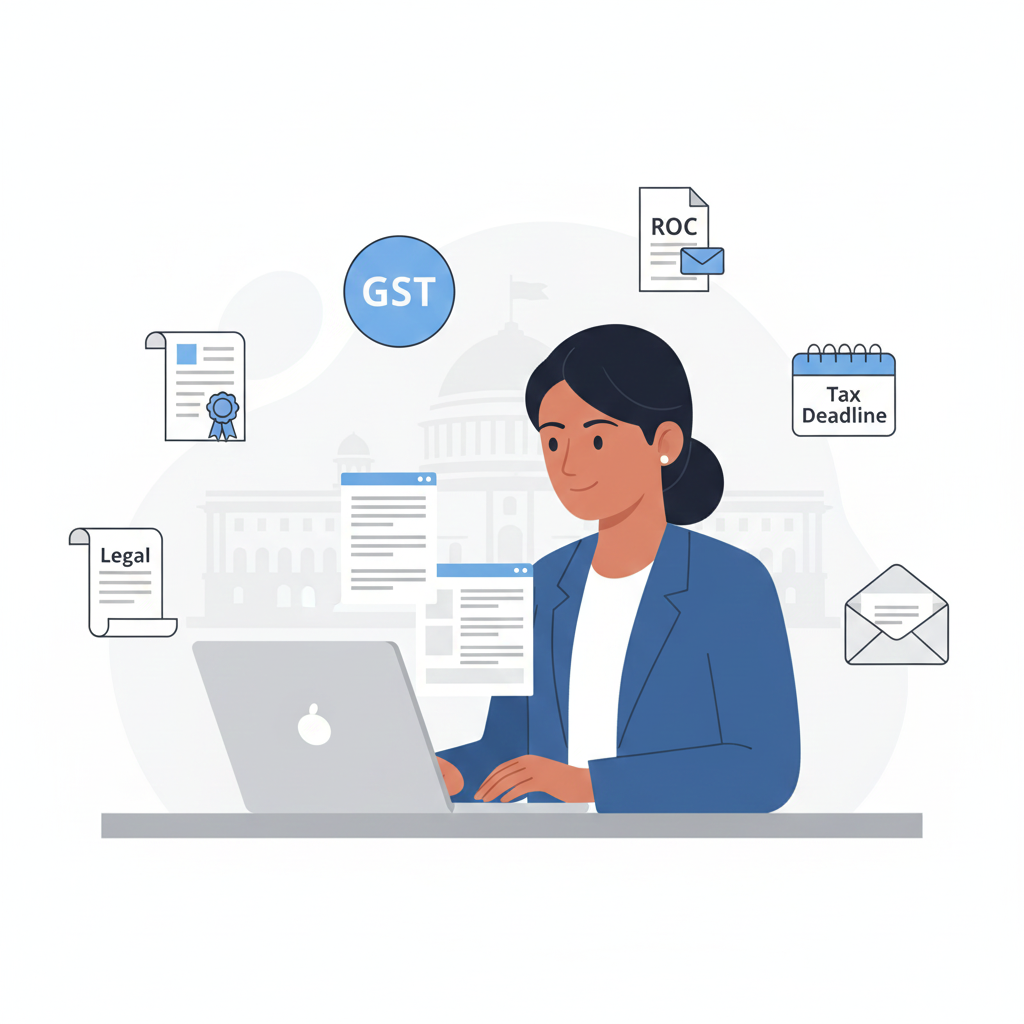
When it is time to file returns or respond to notices, the data is missing. This creates errors in filings. Poor records make compliance work slow and risky. This is another strong reason why business compliance issues in India are common in early years.
Ignoring Payroll and Employee Rules
When a business hires employees, compliance responsibility increases. Rules related to PF, ESIC, salaries, and labor laws must be followed.
Many small businesses ignore these rules because they think they are only for big companies. This belief is wrong. Even small mistakes in payroll compliance can lead to legal trouble. Employee-related mistakes add another layer to business compliance issues in India.
Compliance Is Not One-Time Work
One big misunderstanding is that compliance is a one-time task. Many owners believe that once registration is done, nothing else is needed.
In reality, compliance is a regular activity. It happens monthly, quarterly, and yearly. When businesses treat compliance as occasional work, problems keep coming back. This misunderstanding is a silent reason behind business compliance issues in India.
How Compliance Issues Affect Business Growth
Business compliance issues in India do not just cause penalties. They also block growth. Banks check compliance before giving loans. Investors check records before funding. Large clients ask for legal and tax clarity before signing deals.
If compliance is weak, trust is lost. Even a good business idea cannot grow without trust. This is why compliance should never be ignored, especially in the first three years.
Why Professional Support Makes a Difference
Small businesses do not fail because they break rules on purpose. They fail because rules are complex. Professional support helps businesses stay calm and confident.
With proper guidance, deadlines are met, records are clean, and notices are avoided. Businesses can then focus on growth instead of fear. Reducing business compliance issues in India is possible with the right support system.
Final Thoughts
The first three years play a crucial role in shaping the future of any small business. Ignoring Business Compliance Issues in India during this period can lead to serious problems that become difficult to fix later. While Business Compliance Issues in India are very common, the good news is that they are completely preventable with the right approach.When businesses understand the importance of compliance, maintain proper records, and seek expert guidance at the right time, they create a strong and stable foundation. Managing Business Compliance Issues in India effectively not only reduces stress but also supports smooth operations, better growth opportunities, and long-term success.