

GST Rule 37

GST Rule 37 Explained: The 180-Day ITC Rule Every Business Must Know
If you are running a business and claiming Input Tax Credit (ITC), then GST Rule 37 is something you simply cannot ignore. Many businesses lose money not because they are doing something wrong intentionally, but because they don’t fully understand this rule. It may look technical at first, but once you understand it properly, it becomes very easy to manage.In simple terms, GST Rule 37 says that if you do not pay your supplier within 180 days from the invoice date, then the ITC you claimed on that invoice must be reversed. This rule ensures that businesses claim tax credit only on actual payments and not just on paper transactions.
What is GST Rule 37 and Why It Matters
GST Rule 37 is a compliance rule that connects your payment cycle with your tax benefits. When you purchase goods or services and claim ITC, the government expects you to complete the payment within a fixed time frame. That time frame is 180 days from the invoice date.If you fail to make the payment within this period, the ITC that you have already claimed gets added back to your tax liability. This directly increases the amount of tax you need to pay. This is why understanding GST Rule 37 is important for maintaining proper financial planning and avoiding unnecessary losses.
Understanding the 180-Day ITC Rule in Simple Words
“To make this even easier, here’s a quick breakdown of different situations under GST Rule 37:”
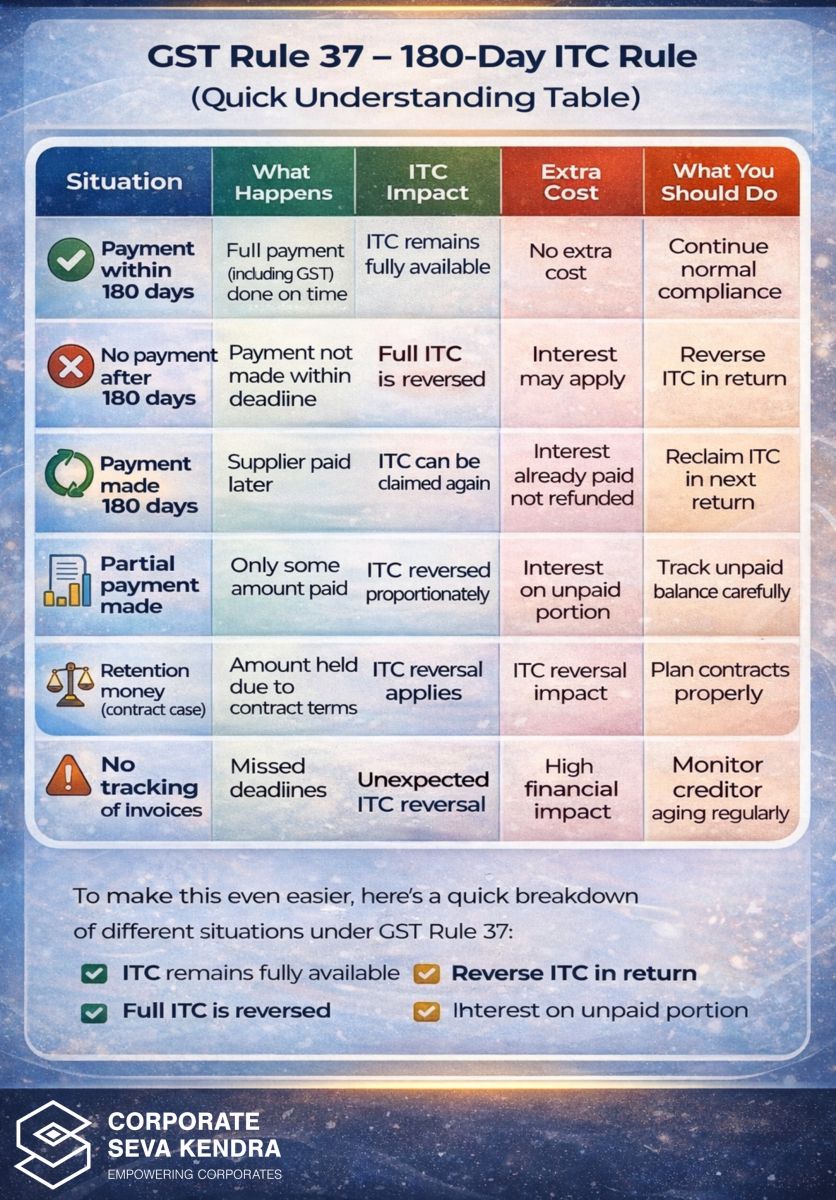
“As you can see, the biggest risk comes when payments are delayed beyond 180 days.”
What Happens When You Don’t Pay Within 180 Days
Under GST Rule 37, if you do not pay your supplier within the given time, the first result is ITC reversal. The credit you claimed earlier is removed and added back to your tax liability. This means you have to pay more tax immediately.Along with this, GST Rule 37 also allows charging interest on the reversed ITC amount. This interest is calculated from the date you first claimed the ITC. So, if you delay more, you end up paying more.Because of this, GST Rule 37 can affect your cash flow and business planning, especially when many invoices are pending.
Can You Claim ITC Again After Making Payment
Yes, there is relief in this rule. If you make the payment to your supplier after the 180-day period, you are allowed to claim the ITC again. You can reclaim this credit in your next GST return after the payment is completed.This means the ITC is not permanently lost. However, the temporary reversal and interest cost can still impact your finances. That is why timely payment is always the better option.
Partial Payment Rule Explained
One important part of GST Rule 37 is that it works proportionately. This means if you have partially paid the invoice, then only the unpaid portion is considered for ITC reversal.For example, if you have paid 80% of the invoice amount and 20% remains unpaid, then only 20% of the ITC will be reversed. This rule is fair because it does not penalize you for the amount you have already paid. It ensures that businesses are only affected for the unpaid portion and not the entire invoice.
Retention Money Rule – A Common Confusion
Many businesses believe that retention money mentioned in contracts is exempt from this rule, but that is not correct. Even if a part of the payment is held back due to contractual terms, it is still considered unpaid after 180 days.This means ITC reversal will still apply to that retained amount. This is a common mistake that many businesses make, and it often leads to unexpected tax liabilities. It is important to plan contracts carefully and understand how retention clauses affect GST compliance.
Why Businesses Must Take GST Rule 37 Seriously
GST Rule 37 is not just a technical rule; it directly affects your business finances. It ensures that only genuine transactions are used for claiming ITC and promotes discipline in payment cycles.Following this rule helps you avoid penalties, manage your cash flow better, and maintain a clean GST record. Ignoring it, on the other hand, can lead to higher tax payments, interest costs, and even notices from tax authorities.
Common Mistakes to Avoid
Many businesses lose ITC because of simple mistakes. Some of the most common ones include not tracking the 180-day deadline, failing to monitor unpaid invoices, and not reversing ITC on time. Others include misunderstanding the partial payment rule or ignoring retention money implications.These mistakes may seem small, but they can lead to significant financial losses. Having a proper system in place can help you avoid these issues easily.
How to Avoid ITC Reversal and Stay Compliant
The best way to avoid ITC reversal is to stay organized. You should regularly track your payment deadlines and maintain a clear record of all invoices. Monitoring creditor aging is also very important, as it helps you identify unpaid invoices before they cross 180 days.You should also reconcile your ITC with your actual payments on a regular basis. This ensures that your GST returns reflect accurate data. Most importantly, try to pay your suppliers on time to avoid unnecessary complications.
How Corporate Seva Kendra Can Help You
Managing GST compliance can be challenging, especially when you are handling multiple invoices and payments. This is where expert guidance can make a big difference.Corporate Seva Kendra helps businesses manage GST filings, track ITC, and stay compliant with all rules, including GST Rule 37. With proper support, you can avoid penalties, save money, and focus more on growing your business instead of worrying about tax issues.
Conclusion
GST Rule 37 is simple but very important. It clearly states that if you do not pay your supplier within 180 days, your ITC will be reversed. However, if you make the payment later, you can reclaim the ITC again.The key is to stay aware, track your payments, and follow the rule properly. By doing this, you can protect your business from unnecessary losses, avoid penalties, and maintain smooth GST compliance.